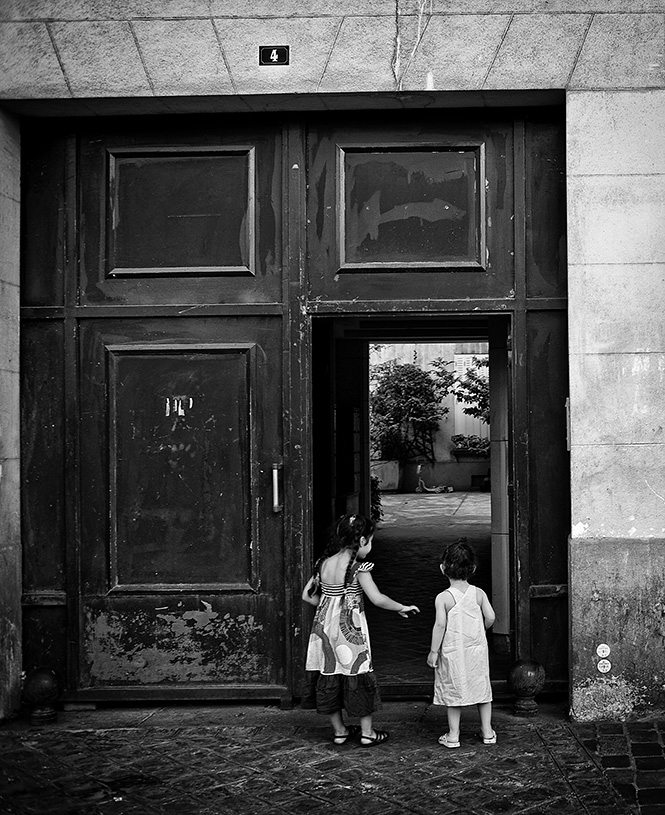
Street photographer Eric Kim is a recent UCLA grad who is devoted to what he calls beauty in the mundane; for him, the ordinarily beautiful is found on streets of Los Angeles, South Korea, and Europe. Eric also has a blog loaded with his insights into photography including his feelings on the open source movement and how to conduct social breaching experiments. His upcoming manual "Street Photography 101" is set to be published online and include tidbits like "Ways to take candid photos without being creepy." In line with his commitment to accessible art education, "Street Photography 101" will be available for download for free: "It’s kind of childish of me, but human nature is about sharing."
28 August 2010
21 August 2010
An Interview with Priya Pandya, Founding Partner of Dhoonya Dance
by Arton Gjonbalaj
A: Where does Bollywood dance originate?
P: Storytelling—through dance—has been a part of India’s rich culture dating back centuries. Classical Indian dances, such as Bharatanatyam and Kathak, originated in the temples as an artistic way of conveying religious tales and epics. Folk dance styles such as Bhangra originated as a way of passing time in the fields of Northern India while harvesting crops.
A hallmark of the Bollywood, a portmanteau that refers to the Hindi language movie industry, is the lively song-and-dance numbers that pepper almost every film. There’s a certain escapism and joy in these songs that I think everyone can relate to and appreciate as an outlet, even if they can’t understand the language.
As a reflection of popular culture, Bollywood dance fuses elements of classical Indian dances and traditional Indian folk dances with Western dance forms to create a genre of its own. Basic Bollywood steps rely on the relationship between the leg and hip, what often takes students the longest time to master. Once the hip movements become natural, each progressive step is much easier to learn.
A: Could you please give a little description about your interest in dance and why you decided to start Dhoonya Dance?
P: It has been a lifelong mission of mine to bring Indian-inspired arts to the forefront of global and local communities. Kajal Mehta and I started Dhoonya Dance in 2005 as a way to educate others, with respect to our culture and what we love to do, to enhance the already diverse options of dance styles available to students, and provide a fun yet rigorous exercise regimen.
It has been amazing in these five years to see the growth of our school Dhoonya Dance grow into two metropolitan areas—Washington, D.C. and New York City. We have also been afforded some incredible opportunities, such as dancing on The Oprah Winfrey Show, the CBS Early Show, and the Smithsonian Institute. We are excited about continuing to serve as ambassadors of Indian arts and culture!
A: What does dance mean to you, and what makes Indian dance particularly fascinating?
P: There are so many forms of Indian dance that it would be difficult to describe Indian dance as one facet. However, Bollywood dancers in specific are usually noted for their grace, a certain subtle sensuality of expression, as well as fluid hip movements.
Bollywood dance sequences—often noted for the colorful costumes, gorgeous backdrops, and overall spectacle—tell a story through each and every song. So as you work on the technical aspects of the choreography, you are also playing a character, and it is important to convey those expressions and emotions, whether it is the joy a bride feels on her wedding day or the anguish of a lost love.
A: What sort of techniques or concepts do Dhoonya instructors use to keep students motivated? What makes Dhoonya unique?
P: Dhoonya is unique because we have developed a specialized, technique-driven curriculum to a style of dance that is not traditionally rooted in technique. All of our instructors undergo a rigorous training program. In terms of keeping our students motivated, we look to introduce new styles each session, and add variety to the songs we teach. For example, if one class we teach a more folk-based number, then the next class might have a more contemporary or classically rooted song.
A: Where do you see the trajectory of dance a few years from now?
P: I hope that with increasing globalization making the world a smaller place, we will see greater cultural appreciation and awareness that would influence dance as well. I hope that people everywhere will become aware of and integrated into the many global beats and movements that they might not have had access to before.
A: How do I learn more and get involved? Where do I sign up?
P: We offer classes for all ages and levels. No dance experience in necessary. We hold classes in NYC, Washington DC, Virginia and Maryland! Sign up for the newsletter and get updates by emailing info@dhoonyadance.com or visit our website at www.dhoonyadance.com!
by Arton Gjonbalaj
A: Where does Bollywood dance originate?
P: Storytelling—through dance—has been a part of India’s rich culture dating back centuries. Classical Indian dances, such as Bharatanatyam and Kathak, originated in the temples as an artistic way of conveying religious tales and epics. Folk dance styles such as Bhangra originated as a way of passing time in the fields of Northern India while harvesting crops.
A hallmark of the Bollywood, a portmanteau that refers to the Hindi language movie industry, is the lively song-and-dance numbers that pepper almost every film. There’s a certain escapism and joy in these songs that I think everyone can relate to and appreciate as an outlet, even if they can’t understand the language.
As a reflection of popular culture, Bollywood dance fuses elements of classical Indian dances and traditional Indian folk dances with Western dance forms to create a genre of its own. Basic Bollywood steps rely on the relationship between the leg and hip, what often takes students the longest time to master. Once the hip movements become natural, each progressive step is much easier to learn.
A: Could you please give a little description about your interest in dance and why you decided to start Dhoonya Dance?
P: It has been a lifelong mission of mine to bring Indian-inspired arts to the forefront of global and local communities. Kajal Mehta and I started Dhoonya Dance in 2005 as a way to educate others, with respect to our culture and what we love to do, to enhance the already diverse options of dance styles available to students, and provide a fun yet rigorous exercise regimen.
It has been amazing in these five years to see the growth of our school Dhoonya Dance grow into two metropolitan areas—Washington, D.C. and New York City. We have also been afforded some incredible opportunities, such as dancing on The Oprah Winfrey Show, the CBS Early Show, and the Smithsonian Institute. We are excited about continuing to serve as ambassadors of Indian arts and culture!
A: What does dance mean to you, and what makes Indian dance particularly fascinating?
P: There are so many forms of Indian dance that it would be difficult to describe Indian dance as one facet. However, Bollywood dancers in specific are usually noted for their grace, a certain subtle sensuality of expression, as well as fluid hip movements.
Bollywood dance sequences—often noted for the colorful costumes, gorgeous backdrops, and overall spectacle—tell a story through each and every song. So as you work on the technical aspects of the choreography, you are also playing a character, and it is important to convey those expressions and emotions, whether it is the joy a bride feels on her wedding day or the anguish of a lost love.
A: What sort of techniques or concepts do Dhoonya instructors use to keep students motivated? What makes Dhoonya unique?
P: Dhoonya is unique because we have developed a specialized, technique-driven curriculum to a style of dance that is not traditionally rooted in technique. All of our instructors undergo a rigorous training program. In terms of keeping our students motivated, we look to introduce new styles each session, and add variety to the songs we teach. For example, if one class we teach a more folk-based number, then the next class might have a more contemporary or classically rooted song.
A: Where do you see the trajectory of dance a few years from now?
P: I hope that with increasing globalization making the world a smaller place, we will see greater cultural appreciation and awareness that would influence dance as well. I hope that people everywhere will become aware of and integrated into the many global beats and movements that they might not have had access to before.
A: How do I learn more and get involved? Where do I sign up?
P: We offer classes for all ages and levels. No dance experience in necessary. We hold classes in NYC, Washington DC, Virginia and Maryland! Sign up for the newsletter and get updates by emailing info@dhoonyadance.com or visit our website at www.dhoonyadance.com!
11 August 2010
spotlight: blog in vogue
Writer Christina Brown is getting all kinds of attention for her savvy content on fashion for the fearless everyday woman. By day, she's the twenty-three-year-old editorial assistant for Honey Magazine with content posted daily at Honeymag.com. When she's not getting celebrity interviews or running to industry events, Christina moonlights as popular fashion blogger at LoveBrownSugar.com; her fresh content has been featured on the likes of The Fashion Bomb, Clutch Magazine, Style & Substance Mag and Lovelyish Blog. Before studying Marketing and Retail at the Wharton School of the University of Pennsylvania, Christina interned at BET and Saks' midtown headquarters. Although it's obvious that Christina lives and breathes designer, you might not guess that she's true homegrown talent: she made her start sewing with her friends in high school; her outdoor photo spreads on LoveBrownSugar are shot by her brother-in-law; and her blog just sort of happened: "I did it because I thought it would be fun."

ergomaniac.
My day-to-day is pretty hectic but overall, pretty exciting. I work for Honey Magazine as a full-time editorial assistant. I'm in charge of all their fashion, beauty and lifestyle content, as well as a host of other things like celeb interviews, etc.I work with all kinds of people in the industry - I work especially close with editors and other freelance writers. I'm also constantly in touch with publicists and their respective clients from fashion mavens to music artists. Once I leave my job at Honey, I normally have an industry event to attend in the evening and after all that I head home to pen articles for LoveBrownSugar.com. My work is never over!
ingenue.
I've always loved fashion. I can remember being in love with vintage shopping all the way back in Junior High School when I first discovered a thrift store near my house in Queens. When I got to high school, I decided to start a "club" for other fashionistas like me who wanted to learn how to sew clothing and talk about fashion. So I started one, called SAS - "Sewing and Style". It's one of my fondest accomplishments though I never talk about it. We even had countless bake sales so we could buy our first sewing machine. It was a great time. Anyway, I went on to college and I joined a fashion-based organization called Dzine2Show, became a fashion editor for their first magazine The Walk and also started interning at Saks Incoporated in the buying department. After racking up a few more summers of internship work, I landed an editorial assistant position at Honey!
blogger.
I think blogging is such a powerful tool these days. It's the perfect form of self-induced press and promotion. My blog even granted me access to Mercedes-Benz fashion week. There isn't much more you can ask for. It's a great way to get your name out there and develop a following. I did it because I thought it would be fun. I never really did it with the intentions of it blowing up as largely as it did. I absolutely love it. When I can initiate conversation and discussion, when I can give curvy girls confidence to rock their favorite outfits, or young aspiring writers the inspiration they need to do their own thing, it makes me feel accomplished. I started out doing this just for myself and it's grown into something I do not just for me but for my readers.
philosopher.
Everything happens for a reason. I live by this phrase. It's a constant reminder to me that each step I take, each opportunity I'm presented with, and each person I meet is part of the divine order and purpose in my life. Sometimes bad things happen, or you meet bad people. They were sent to you as lessons to learn from and build upon. Never a failure, but always a lesson.

ergomaniac.
My day-to-day is pretty hectic but overall, pretty exciting. I work for Honey Magazine as a full-time editorial assistant. I'm in charge of all their fashion, beauty and lifestyle content, as well as a host of other things like celeb interviews, etc.I work with all kinds of people in the industry - I work especially close with editors and other freelance writers. I'm also constantly in touch with publicists and their respective clients from fashion mavens to music artists. Once I leave my job at Honey, I normally have an industry event to attend in the evening and after all that I head home to pen articles for LoveBrownSugar.com. My work is never over!
ingenue.
I've always loved fashion. I can remember being in love with vintage shopping all the way back in Junior High School when I first discovered a thrift store near my house in Queens. When I got to high school, I decided to start a "club" for other fashionistas like me who wanted to learn how to sew clothing and talk about fashion. So I started one, called SAS - "Sewing and Style". It's one of my fondest accomplishments though I never talk about it. We even had countless bake sales so we could buy our first sewing machine. It was a great time. Anyway, I went on to college and I joined a fashion-based organization called Dzine2Show, became a fashion editor for their first magazine The Walk and also started interning at Saks Incoporated in the buying department. After racking up a few more summers of internship work, I landed an editorial assistant position at Honey!
blogger.
I think blogging is such a powerful tool these days. It's the perfect form of self-induced press and promotion. My blog even granted me access to Mercedes-Benz fashion week. There isn't much more you can ask for. It's a great way to get your name out there and develop a following. I did it because I thought it would be fun. I never really did it with the intentions of it blowing up as largely as it did. I absolutely love it. When I can initiate conversation and discussion, when I can give curvy girls confidence to rock their favorite outfits, or young aspiring writers the inspiration they need to do their own thing, it makes me feel accomplished. I started out doing this just for myself and it's grown into something I do not just for me but for my readers.
philosopher.
Everything happens for a reason. I live by this phrase. It's a constant reminder to me that each step I take, each opportunity I'm presented with, and each person I meet is part of the divine order and purpose in my life. Sometimes bad things happen, or you meet bad people. They were sent to you as lessons to learn from and build upon. Never a failure, but always a lesson.
04 August 2010
Read West, Young Men!
So there are times when it just feels right to be reminded how shitty the world can be. Modern readers love to read about suffering almost as much as modern writers love to write about it, but neither tend to have a stomach for unmitigated cynicism. The role of pessimism in fiction these days is as a backdrop against which the moral of the story shines, however feebly. Ann Lamott, in her seminal instruction manual Bird by Bird (which, partly by way of apology to Miss Lamott, I recommend to any aspiring writer) actually has the gall to ask why somebody who does not believe in the underlying good of humanity should bother writing at all. Should Lamott and an author like Nathanael West have ever crossed paths, I’d imagine the latter might ask why someone who does not believe in the underlying good of humanity should bother with anything but writing.
Which leads me, conveniently enough, West’s novella Miss Lonelyhearts, a fifty-eight page descent into Depression-era New York as seen through the eyes of the eponymous advice columnist known only to the readers by his humiliating nom de plume. In a lot of respects it’s darker than West’s later and better known novella Day of the Locust, largely considered the best novel about Hollywood ever written. We all know the quest for fame and riches is soul-eviscerating. But Miss Lonelyhearts surrenders the possibility of fame via its protagonist’s literal and ethical anonymity.
On the surface, it looks like the ingredients are all laid out for a nice Bukowski smoothie: Frustrated, chain-smoking wordsmith stuck in a job he’d rather not have? Check. Liquor by the bucketful? Double check! Frenzied, oversexed women after the hero’s soul? And how! You would think that all West would have to do is switch on the blender. But this isn’t that kind of book. Check out some of Miss Lonelyhearts’ mail:
“Dear Miss Lonelyhearts-
I am sixteen years old and I don’t know what to do and would appreciate it
if you could tell me what to do…I would like to have boy friends like the
other girls and go out on Saturday nites, but no boy will take me because I
was born without a nose – although I am a good dance and have a nice shape
and my father buys me pretty clothes…I asked Papa and he said that…maybe I
was being punished for his sins. I don’t believe that because he is a very
nice man. Ought I commit suicide?”
Or, on the end of the spectrum:
“Dear Miss Lonelyhearts-
I am in such pain I don’t know what to do sometimes I think I will kill
myself my kidneys hurt so much. My husband thinks no woman can be a good
catholic and not have children irregardless of the pain…I have 7 children in
12 years and ever since the last 2 I have been so sick. I was operatored on
twice and my husband promised no more children on the doctors advice as he
said I might die but when I got back from the hospital he broke his promise
and now I am going to have a baby and I don’t think I can stand it my
kidneys hurt so much…I can’t have an abortion on account of being a catholic
and my husband so religious. I cry all the time it hurts so much and I don’t
know what to do.”
There are more. Needless to say, Miss Lonelyhearts’ paper, the New York Post-Dispatch does not publish these letters and that Miss Lonelyhearts is not required to answer them. All he’s required to do is shovel through them, day after day, all the while insisting to his faithful readers that “life is worth living.” Of course it isn’t long at all before Miss Lonelyhearts begins behaving as atrociously as any depraved Gonzo journalist or proto-Corso type we see wandering through twentieth century literature. If anything, West edges towards Brett Eaton Ellis in terms of sheer savagery. Before the novel is through, Miss Lonelyhearts puts an elderly stranger in a hammerlock, beats a woman with his fists for making sexual advances on him, and throws her crippled husband down a flight of stairs (to be fair, he takes the tumble with him and it is not at all clear whether either man survives). And yet Miss Lonelyhearts is no Patrick Bateman. He cares. God, he cares. And it’s carving out his insides.
It would be easy to say something along the lines of “It’s been seventy years since this book was published, but look! This could have been written today!” But that wouldn’t really be true. We don’t write books like this anymore. For one thing, novellas aren’t such a hot commodity these days, mostly because they are a losing proposition from the perspective of their authors. Novels are easier to sell. Short stories are easier to publish. When they do show up on our radar they tend to either be atmospheric affairs like Stewart O’Nan’s Last Night at the Lobster or Hard SF meditations like Cory Doctorow and Benjamin Rosenbaum’s True Names. Not the kind of thing you pick up unless you’re already looking for it.
But a contemporary Miss Lonelyhearts would have a bigger problem than its inconvenient page count. To be sure, modern consumers lap up books like A Long Way Gone, The Kite Runner, and We Wish To Inform You That Tomorrow We Will Be Killed Along With Our Families. Memoirists like Mary Karr and pseudo-memoirists like James Frey also do well for themselves at the markets. In the realm of fiction, writers like Stieg Larsson and dominates our lust for violence, sex, and every conceivable combination thereof. Clearly, we like reading about murder, rape, genocide, drug addiction, and personality defects. We like living in a world in which such things are possible. Where we draw the line is living in a world where such things are likely or even certain. And if there’s one thing we can’t stand, it’s living in a world where these problems are our problem. It’s enough to drive us crazy. Without a doubt, it drives Miss Lonelyhearts to a fever pitch of psychoses and even though Nathanael West gives us every chance in the world to distance ourselves from his unforgivable behavior…we don’t. Passing out drunk rather than finishing the Miss Lonelyhearts column makes perfect sense. Even smacking around Faye Doyle feels earned in the moment. By the time we reach the penultimate scene, in which Miss Lonelyhearts fiancĂ©e Betty informs him that she is pregnant, nothing seems like a worse idea than bringing a child into the world through which Miss Lonelyhearts skulks.
Which leads me, conveniently enough, West’s novella Miss Lonelyhearts, a fifty-eight page descent into Depression-era New York as seen through the eyes of the eponymous advice columnist known only to the readers by his humiliating nom de plume. In a lot of respects it’s darker than West’s later and better known novella Day of the Locust, largely considered the best novel about Hollywood ever written. We all know the quest for fame and riches is soul-eviscerating. But Miss Lonelyhearts surrenders the possibility of fame via its protagonist’s literal and ethical anonymity.
On the surface, it looks like the ingredients are all laid out for a nice Bukowski smoothie: Frustrated, chain-smoking wordsmith stuck in a job he’d rather not have? Check. Liquor by the bucketful? Double check! Frenzied, oversexed women after the hero’s soul? And how! You would think that all West would have to do is switch on the blender. But this isn’t that kind of book. Check out some of Miss Lonelyhearts’ mail:
“Dear Miss Lonelyhearts-
I am sixteen years old and I don’t know what to do and would appreciate it
if you could tell me what to do…I would like to have boy friends like the
other girls and go out on Saturday nites, but no boy will take me because I
was born without a nose – although I am a good dance and have a nice shape
and my father buys me pretty clothes…I asked Papa and he said that…maybe I
was being punished for his sins. I don’t believe that because he is a very
nice man. Ought I commit suicide?”
Or, on the end of the spectrum:
“Dear Miss Lonelyhearts-
I am in such pain I don’t know what to do sometimes I think I will kill
myself my kidneys hurt so much. My husband thinks no woman can be a good
catholic and not have children irregardless of the pain…I have 7 children in
12 years and ever since the last 2 I have been so sick. I was operatored on
twice and my husband promised no more children on the doctors advice as he
said I might die but when I got back from the hospital he broke his promise
and now I am going to have a baby and I don’t think I can stand it my
kidneys hurt so much…I can’t have an abortion on account of being a catholic
and my husband so religious. I cry all the time it hurts so much and I don’t
know what to do.”
There are more. Needless to say, Miss Lonelyhearts’ paper, the New York Post-Dispatch does not publish these letters and that Miss Lonelyhearts is not required to answer them. All he’s required to do is shovel through them, day after day, all the while insisting to his faithful readers that “life is worth living.” Of course it isn’t long at all before Miss Lonelyhearts begins behaving as atrociously as any depraved Gonzo journalist or proto-Corso type we see wandering through twentieth century literature. If anything, West edges towards Brett Eaton Ellis in terms of sheer savagery. Before the novel is through, Miss Lonelyhearts puts an elderly stranger in a hammerlock, beats a woman with his fists for making sexual advances on him, and throws her crippled husband down a flight of stairs (to be fair, he takes the tumble with him and it is not at all clear whether either man survives). And yet Miss Lonelyhearts is no Patrick Bateman. He cares. God, he cares. And it’s carving out his insides.
It would be easy to say something along the lines of “It’s been seventy years since this book was published, but look! This could have been written today!” But that wouldn’t really be true. We don’t write books like this anymore. For one thing, novellas aren’t such a hot commodity these days, mostly because they are a losing proposition from the perspective of their authors. Novels are easier to sell. Short stories are easier to publish. When they do show up on our radar they tend to either be atmospheric affairs like Stewart O’Nan’s Last Night at the Lobster or Hard SF meditations like Cory Doctorow and Benjamin Rosenbaum’s True Names. Not the kind of thing you pick up unless you’re already looking for it.
But a contemporary Miss Lonelyhearts would have a bigger problem than its inconvenient page count. To be sure, modern consumers lap up books like A Long Way Gone, The Kite Runner, and We Wish To Inform You That Tomorrow We Will Be Killed Along With Our Families. Memoirists like Mary Karr and pseudo-memoirists like James Frey also do well for themselves at the markets. In the realm of fiction, writers like Stieg Larsson and dominates our lust for violence, sex, and every conceivable combination thereof. Clearly, we like reading about murder, rape, genocide, drug addiction, and personality defects. We like living in a world in which such things are possible. Where we draw the line is living in a world where such things are likely or even certain. And if there’s one thing we can’t stand, it’s living in a world where these problems are our problem. It’s enough to drive us crazy. Without a doubt, it drives Miss Lonelyhearts to a fever pitch of psychoses and even though Nathanael West gives us every chance in the world to distance ourselves from his unforgivable behavior…we don’t. Passing out drunk rather than finishing the Miss Lonelyhearts column makes perfect sense. Even smacking around Faye Doyle feels earned in the moment. By the time we reach the penultimate scene, in which Miss Lonelyhearts fiancĂ©e Betty informs him that she is pregnant, nothing seems like a worse idea than bringing a child into the world through which Miss Lonelyhearts skulks.
27 July 2010
spotlight: varsity model
Model Charlette Williams is a twenty-two-year-old Queens girl and learning the importance of balancing life and art in the city. Between modeling, part-time jobs, and a major in Media Studies, the beautiful life is a little messy. When she's not on commercial spreads and local fashion shows, Charlette is featured in the likes of fashion blog Refinery29 and Seventeen magazine. Right now, she is taking time off from Hunter College to work on her career and move into her East Village apartment, but she plans on resuming classes in the fall. After all, she says, "You are what you think!"

good.
I think modeling is art. It's almost like acting. When you're shooting you become that character and the photographer has to capture a moment. It's absolutely beautiful; it is art!
[Modeling] is a great networking source. You meet a lot of very, very important people! Since I started, I got invited to these elite parties around New York City and overseas. I remember meeting a few celebrities here and there. A lot of the top-dollar jobs models book are due to their relationships. You are always being watched; it goes deeper than just taking pictures.
bad.
If you're not strong-minded, I suggest you not do it. Girls come into this industry weak-minded and get easily influenced. Only about 2 percent of the girls make it to the top and make it their full-time career. Only do it if it's your greatest passion. If not, you will probably lose your soul! (Haha)
ugly.
Personally, I think the modeling industry is a mess. I'm sick of seeing 14-year-old girls lost in a big city and getting taken advantage of by older men. It's disgusting! There should be some standards against this!
true story.
At a young age, I knew I was to be a model; my mother told me almost every night. So it became second nature for me. Like I said, only do it if you truly enjoy it [and] always have a back-up plan!

good.
I think modeling is art. It's almost like acting. When you're shooting you become that character and the photographer has to capture a moment. It's absolutely beautiful; it is art!
[Modeling] is a great networking source. You meet a lot of very, very important people! Since I started, I got invited to these elite parties around New York City and overseas. I remember meeting a few celebrities here and there. A lot of the top-dollar jobs models book are due to their relationships. You are always being watched; it goes deeper than just taking pictures.
bad.
If you're not strong-minded, I suggest you not do it. Girls come into this industry weak-minded and get easily influenced. Only about 2 percent of the girls make it to the top and make it their full-time career. Only do it if it's your greatest passion. If not, you will probably lose your soul! (Haha)
ugly.
Personally, I think the modeling industry is a mess. I'm sick of seeing 14-year-old girls lost in a big city and getting taken advantage of by older men. It's disgusting! There should be some standards against this!
true story.
At a young age, I knew I was to be a model; my mother told me almost every night. So it became second nature for me. Like I said, only do it if you truly enjoy it [and] always have a back-up plan!
23 July 2010
drink the young wine
last weekend, my old college roommate invited me to lost&found, an afternoon of "love, life and community" hosted by 88 featuring live art and music from the dc area.
i was most impressed with painter
jeremy arn...
the outdoor/indoor party also featured 4traits, a team of artists that collaboratively draw your portrait in four 5-minute sessions. i started off chatting on one end of the "assembly line" with yen, a graphic designer; four dings and twenty minutes later, i was talking mastiffs with brad, a professional dogwalker, while he put the finishing touches on my face. while the concept was more a play on surrealist drawing games than highly innovative, there was something refreshing about sitting for a 4trait - sort of "exquisite corpse" meets speed dating.
25 December 2009
Merry Christmas
Happy Holidays, everyone!
Not much going on these past few weeks. We continue to read, read, read those submissions. Keep em coming. We started this business, so we could help discover emerging writers. Nothing makes us happier than reading something great from someone not yet known.
13 December 2009
So here's what I like...
So here's what I like and dislike about The Metropolitan Opera and the American Ballet Theatre and how they run their business:
1. Great marketing. Sexy ads and opera trailers. The marketing peeps over there have done a lot to make opera and ballet more appealing to everyone.
2. Combination of old and new: every year they show the old classics (La Traviata, Swan Lake, Romeo and Juliet, Nutcracker) as well as new programs.
3. Live HD broadcast of the operas to movie theaters. When will they have this for ballet??? I can't wait. Plays and other types of performance art should soon follow. I'd pay $18 easily to see a live broadcast version of anything out there now, Broadway or off, and I don't think it would cannibalize sales. I can't remember if I deleted this post or not - but for all the talent we have in this country - the thousands of people who are trying to make it in the arts - there's a surprising lack of stuff to watch. Or what I mean is that it's not very accessible. I don't know how many times I've gone to the movies and been unable to find anything I wanted to see. And I'm sure there's someone out there capable of churning out a hundred plays and screenplays to suit my sensibility perfectly. Someone who's dying to work and dying for an audience and who would give anything to just be given the slightest chance. It's a matter of someone facilitating that connection. Once that connection is facilitated, there will be many more opportunities for artists.
4. Educational initiative: I like that the operas are broadcasted for free to schoolchildren.
5. Affordability. $24 for a Family Circle ticket, $18 for the HD. Reasonable compared to the cost of martinis in this town.
Stuff I dislike:
1. Now I'm not sure what exactly is going on, but I know that ticket sales cover only half of their operating cost. The rest comes from donations. Is it really necessary to have costumes designed by Chanel or Valentino? Why not employ the services of emerging artists who are dying to have any sort of audience for their work? Why not make it a contest? Why not make everything a contest? It would be a lot cheaper, probably of the same quality, serve a good social purpose, and make for a leaner business. And contests are entertaining! Why not broadcast the contest? Open it up to the public? Charge admission? The surface area is endless.
Perhaps this is naive, but I just feel that if all the right minds came together, a good number of problems could be solved.
"Ask not what your country can do for you but what you can do for your country." JFK said that. Growing up, I never had much of a reaction to that quote. Just lame inspirational bullshit is what I thought. I wasn't the kind of person who ever considered "giving back," community service, charity work, etc. I figured that was for people who were sure of themselves and their place in the world. I used to be one of those writers who just wanted to get published and win prizes. Like most people, I wanted recognition and validation, the usual human nonsense. That used to be my whole life. Then I woke up one day - it was literally that abrupt - and thought to myself, "Alright, this is really lame. There has to be more to life than obsessing over prizes." I still loved creative writing, but I didn't want to love it in the old way - the jealous boyfriend kind of way. Immature, selfish love. That's when I decided to become a publisher, to try and generate a system that would enable others and create opportunities. Honestly, it has been very good for me as a human being. It is a bit like having a child, I think. It taught me about responsibility and humility and forced me to get off my ass and work. I hold my temper now. I think before speaking. I watch my expenditures. I try to do a good job at work, a really good job. It's so oddly healthy compared to what life was like before.
1. Great marketing. Sexy ads and opera trailers. The marketing peeps over there have done a lot to make opera and ballet more appealing to everyone.
2. Combination of old and new: every year they show the old classics (La Traviata, Swan Lake, Romeo and Juliet, Nutcracker) as well as new programs.
3. Live HD broadcast of the operas to movie theaters. When will they have this for ballet??? I can't wait. Plays and other types of performance art should soon follow. I'd pay $18 easily to see a live broadcast version of anything out there now, Broadway or off, and I don't think it would cannibalize sales. I can't remember if I deleted this post or not - but for all the talent we have in this country - the thousands of people who are trying to make it in the arts - there's a surprising lack of stuff to watch. Or what I mean is that it's not very accessible. I don't know how many times I've gone to the movies and been unable to find anything I wanted to see. And I'm sure there's someone out there capable of churning out a hundred plays and screenplays to suit my sensibility perfectly. Someone who's dying to work and dying for an audience and who would give anything to just be given the slightest chance. It's a matter of someone facilitating that connection. Once that connection is facilitated, there will be many more opportunities for artists.
4. Educational initiative: I like that the operas are broadcasted for free to schoolchildren.
5. Affordability. $24 for a Family Circle ticket, $18 for the HD. Reasonable compared to the cost of martinis in this town.
Stuff I dislike:
1. Now I'm not sure what exactly is going on, but I know that ticket sales cover only half of their operating cost. The rest comes from donations. Is it really necessary to have costumes designed by Chanel or Valentino? Why not employ the services of emerging artists who are dying to have any sort of audience for their work? Why not make it a contest? Why not make everything a contest? It would be a lot cheaper, probably of the same quality, serve a good social purpose, and make for a leaner business. And contests are entertaining! Why not broadcast the contest? Open it up to the public? Charge admission? The surface area is endless.
Perhaps this is naive, but I just feel that if all the right minds came together, a good number of problems could be solved.
"Ask not what your country can do for you but what you can do for your country." JFK said that. Growing up, I never had much of a reaction to that quote. Just lame inspirational bullshit is what I thought. I wasn't the kind of person who ever considered "giving back," community service, charity work, etc. I figured that was for people who were sure of themselves and their place in the world. I used to be one of those writers who just wanted to get published and win prizes. Like most people, I wanted recognition and validation, the usual human nonsense. That used to be my whole life. Then I woke up one day - it was literally that abrupt - and thought to myself, "Alright, this is really lame. There has to be more to life than obsessing over prizes." I still loved creative writing, but I didn't want to love it in the old way - the jealous boyfriend kind of way. Immature, selfish love. That's when I decided to become a publisher, to try and generate a system that would enable others and create opportunities. Honestly, it has been very good for me as a human being. It is a bit like having a child, I think. It taught me about responsibility and humility and forced me to get off my ass and work. I hold my temper now. I think before speaking. I watch my expenditures. I try to do a good job at work, a really good job. It's so oddly healthy compared to what life was like before.
So many things to do...
So exhausted. We have so much to accomplish. It feels endless. I guess that's part of the fun.
We have a movie-style trailer to make.
We have promotional cards to design.
We have the YouTube channel to start.
We have a movie-style trailer to make.
We have promotional cards to design.
We have the YouTube channel to start.
What Would Make Readings More Interesting II
4. Other art forms: I took a directing class where we staged versions of poems, set to music, etc. Poetry lends itself so easily to theater, music, visual art, dance... readings could easily exploit those connections more.
What Would Make Readings More Interesting
Christina again.
I shouldn't confess this, but where else could I? So here goes: I find readings a little tedious. This is strange because I used to enjoy being read to as a child.
Here's why I think this is:
1. I'm now accustomed to digesting words silently and quickly, so readings are a little slow for my taste. Call it a result of our times and my generation's inability to focus on anything for more than two seconds, but halfway down the first page, and I'm usually gone... Poetry still rivets me, especially when it's performed well, but I'm always lost with stories. Lack of patience? Don't get me wrong. I love action-less, atmospheric stories as much as any literary nerd - what I like to call "clinically depressed fiction of minor epiphanies" - but it's just slow. In undergrad, I always liked professors who lectured rapidly; the words just flew by; it was like scrolling quickly and I could get a sense of the overall contours of the argument. I loved the challenge of note-taking, getting the jist of things, scribbling fiercely to keep up. I guess my problem is that I love form (structure, beam-work, the outline of things). When I hear one sentence at a time, and I'm being read to like a child, it's hard for me to see the whole, and a sense of the whole is part of the beauty.
2. I don't hear anything familiar. As with classical music and ballet and opera and the Boston Pops orchestra, sometimes a few old favorites can energize the crowd. I think if contemporary poets recited the work of other poets - or famous poems which everyone is familiar with - that would help a non-literary crowd make a connection between what they studied in school and the work of contemporary American poets.
People who are going to attend a reading should be able to "request" poems the way you would request "songs" before a formal dance. How much more compelling would it be if before readings you logged into a site and requested your favorite poem to be read by a famous poet of choice? It would be cool to see what other audience members picked, too. That would be half the fun. If I enjoyed the event, I might even purchase a recording afterward.
And it wouldn't matter if some of the poems were a little cheesy - or not what we would call great art. It would be worth the increase in attention.
3. Not enough sensual delight. Okay, I know a million people will disagree with me, and it's probably cheesy of me to feel this way, but people today are busy... there are a million things competing for the attention of audiences... strawberries, champagne, wine and cheese, exotic drinks, and goody bags could go a long way... also, if readings were events where people cared to present themselves well... I don't mean in suits or gowns... but I don't know... masks or costumes or something, that would cast a sense of strangeness and excitement on it all. "All dressed up with nowhere to go" is a problem for many people. Just go on craigslist, and you'll see tons of women looking for "Sex in the City" or "Gossip Girl" girl friends. People want to go out and have a good time. They want life to be Romantic and glamorous. They want to dress up and have somewhere to go.
I shouldn't confess this, but where else could I? So here goes: I find readings a little tedious. This is strange because I used to enjoy being read to as a child.
Here's why I think this is:
1. I'm now accustomed to digesting words silently and quickly, so readings are a little slow for my taste. Call it a result of our times and my generation's inability to focus on anything for more than two seconds, but halfway down the first page, and I'm usually gone... Poetry still rivets me, especially when it's performed well, but I'm always lost with stories. Lack of patience? Don't get me wrong. I love action-less, atmospheric stories as much as any literary nerd - what I like to call "clinically depressed fiction of minor epiphanies" - but it's just slow. In undergrad, I always liked professors who lectured rapidly; the words just flew by; it was like scrolling quickly and I could get a sense of the overall contours of the argument. I loved the challenge of note-taking, getting the jist of things, scribbling fiercely to keep up. I guess my problem is that I love form (structure, beam-work, the outline of things). When I hear one sentence at a time, and I'm being read to like a child, it's hard for me to see the whole, and a sense of the whole is part of the beauty.
2. I don't hear anything familiar. As with classical music and ballet and opera and the Boston Pops orchestra, sometimes a few old favorites can energize the crowd. I think if contemporary poets recited the work of other poets - or famous poems which everyone is familiar with - that would help a non-literary crowd make a connection between what they studied in school and the work of contemporary American poets.
People who are going to attend a reading should be able to "request" poems the way you would request "songs" before a formal dance. How much more compelling would it be if before readings you logged into a site and requested your favorite poem to be read by a famous poet of choice? It would be cool to see what other audience members picked, too. That would be half the fun. If I enjoyed the event, I might even purchase a recording afterward.
And it wouldn't matter if some of the poems were a little cheesy - or not what we would call great art. It would be worth the increase in attention.
3. Not enough sensual delight. Okay, I know a million people will disagree with me, and it's probably cheesy of me to feel this way, but people today are busy... there are a million things competing for the attention of audiences... strawberries, champagne, wine and cheese, exotic drinks, and goody bags could go a long way... also, if readings were events where people cared to present themselves well... I don't mean in suits or gowns... but I don't know... masks or costumes or something, that would cast a sense of strangeness and excitement on it all. "All dressed up with nowhere to go" is a problem for many people. Just go on craigslist, and you'll see tons of women looking for "Sex in the City" or "Gossip Girl" girl friends. People want to go out and have a good time. They want life to be Romantic and glamorous. They want to dress up and have somewhere to go.
Recent News
This is Christina here. In case people didn't know, several different members of our staff blog here.
We're doing our best at this point to get as many submissions as possible. It's tough with this time of year because everyone seems to be consumed with paper grading. We saw a flood of submissions around August and September.
One thing I noticed: despite the femininity of the site (it's supposed to be gender neutral), we receive far more submissions from men than from women. Someone once told me that more men submit to literary journals in this country than women (but women still dominate other aspects of the publishing industry). I wonder why that is. Are men more confident about their work? Are they more aggressive about their artistic careers? Do they submit prematurely? It would be interesting to pursue those questions with research and hard data.
We're doing our best at this point to get as many submissions as possible. It's tough with this time of year because everyone seems to be consumed with paper grading. We saw a flood of submissions around August and September.
One thing I noticed: despite the femininity of the site (it's supposed to be gender neutral), we receive far more submissions from men than from women. Someone once told me that more men submit to literary journals in this country than women (but women still dominate other aspects of the publishing industry). I wonder why that is. Are men more confident about their work? Are they more aggressive about their artistic careers? Do they submit prematurely? It would be interesting to pursue those questions with research and hard data.
20 October 2009
Where the Wild Things Are
I always get really nervous whenever my favorite childhood books are turned into movies. Hollywood has a habit of destroying my childhood. One memory I have is of seeing the Golden Compass and leaving the theater in tears because it had been so bad.
So I was a little afraid when I bought my ticket for Where the Wild Things are, even though it's been so long since I read the book that the only sentence I remember is, "LET THE WILD RUMPUS BEGIN," and to be honest I remembered it because it was a Facebook bumper sticker.
When the music by Karen O began, however, and Max began to dig around in the snow nostalgia was stirred up in me. When he slid belly-first into the ice cave, immersed in a private blue-glowing world, I thought, yeah, this is childhood.
And for all of its plot problems-none of the Wild Thing's problems reaching any kind of denouement being the major one-that is the movie's greatest quality. The high-energy music and the creation of a richly unique world brought me back to a time in my life when imagination was for its own pure creative enjoyment, and not something to marketed.
The scene that stands out as a perfect moment was not even from the book but particular to Spike Jonez's creation. It's when Max sticks his head into the world Carol has created out of sticks, perfect mountains painted and little clay figurines, and he pours water that rushes towards Max but at the last moment slides around. The quiet, miniature moment was crystalline and beautiful and entirely Jonez's own.
So yeah, thanks Spike Jonez for not stomping on my childhood. And I really mean that.
-Alyssa
So I was a little afraid when I bought my ticket for Where the Wild Things are, even though it's been so long since I read the book that the only sentence I remember is, "LET THE WILD RUMPUS BEGIN," and to be honest I remembered it because it was a Facebook bumper sticker.
When the music by Karen O began, however, and Max began to dig around in the snow nostalgia was stirred up in me. When he slid belly-first into the ice cave, immersed in a private blue-glowing world, I thought, yeah, this is childhood.
And for all of its plot problems-none of the Wild Thing's problems reaching any kind of denouement being the major one-that is the movie's greatest quality. The high-energy music and the creation of a richly unique world brought me back to a time in my life when imagination was for its own pure creative enjoyment, and not something to marketed.
The scene that stands out as a perfect moment was not even from the book but particular to Spike Jonez's creation. It's when Max sticks his head into the world Carol has created out of sticks, perfect mountains painted and little clay figurines, and he pours water that rushes towards Max but at the last moment slides around. The quiet, miniature moment was crystalline and beautiful and entirely Jonez's own.
So yeah, thanks Spike Jonez for not stomping on my childhood. And I really mean that.
-Alyssa
24 August 2009
fifteen books in fifteen minutes
I took this from ruth_the_sleuth.livejournal.com
Don't take too long to think about it. Fifteen books you've read that will always stick with you. They don't have to be the greatest books you've ever read, just the ones that stick with you. First fifteen you can recall in no more than 15 minutes.
Copy these instructions and tag your friends - because I'm interested in seeing what books are in your head.
1. The Writing Life by Annie Dillard
2. On Beauty by Zadie Smith
3. On the Road by Jack Kerouac
4. The Sun Also Rises by Ernest Hemingway
5. Mrs. Dalloway by Virginia Woolf
6. Life and Times of the Thunderbolt Kid by Bill Bryson
7. Watership Down
8. Harry Potter and the Goblet of Fire (just saw part of the movie)
9. Brave New World by Aldous Huxley
10. Tropic of Capricorn by Henry Miller
11. The Diaries of Anais Nin
12. Orlando by Virginia Woolf
13. A sentimental Education by Gustave Flaubert
14. The first Animorphs book (did those have titles?)
15. Wonder Boys by Michael Chabon.
A lot of these I've read recently or just enjoyed a great deal.
I tag anyone who happens to be reading this. Post it in the comments. I want to know.
-Alyssa
Don't take too long to think about it. Fifteen books you've read that will always stick with you. They don't have to be the greatest books you've ever read, just the ones that stick with you. First fifteen you can recall in no more than 15 minutes.
Copy these instructions and tag your friends - because I'm interested in seeing what books are in your head.
1. The Writing Life by Annie Dillard
2. On Beauty by Zadie Smith
3. On the Road by Jack Kerouac
4. The Sun Also Rises by Ernest Hemingway
5. Mrs. Dalloway by Virginia Woolf
6. Life and Times of the Thunderbolt Kid by Bill Bryson
7. Watership Down
8. Harry Potter and the Goblet of Fire (just saw part of the movie)
9. Brave New World by Aldous Huxley
10. Tropic of Capricorn by Henry Miller
11. The Diaries of Anais Nin
12. Orlando by Virginia Woolf
13. A sentimental Education by Gustave Flaubert
14. The first Animorphs book (did those have titles?)
15. Wonder Boys by Michael Chabon.
A lot of these I've read recently or just enjoyed a great deal.
I tag anyone who happens to be reading this. Post it in the comments. I want to know.
-Alyssa
19 August 2009
Women Hold Up Half The Sky
Not exactly a literary post, but I thought this Times magazine article is definitely something worth advertising.
http://www.nytimes.com/2009/08/23/magazine/23Women-t.html?pagewanted=7&partner=rss&emc=rss&src=ig
I hate it when well-educated girls claim that they hate feminism, because they assume being feminist means being ugly and angry. Part of being a feminist is just being aware.
http://www.nytimes.com/2009/08/23/magazine/23Women-t.html?pagewanted=7&partner=rss&emc=rss&src=ig
I hate it when well-educated girls claim that they hate feminism, because they assume being feminist means being ugly and angry. Part of being a feminist is just being aware.
An Epistolary Post
Dear Blogland,
I am once again preparing to move vast distances in order to finish up my extremely expensive and possibly useless degree. I'm leaving behind a few friends scattered in the West and a few who have temporarily defected to Asia. Now, I've got to figure out how I'm going to stay in touch with all of these people.
No one likes finding out important personal information about a close friend through Facebook. Facebook puts your best friend on about the same importance scale as that random chick who friended your entire class during New Student Orientation. It's insulting, and depressing, but it's also so damn easy, which is why people just change their relationship status instead of picking up a phone and saying, "By the way, I'm getting hitched."
The problem is that I hate my cell phone. It's heavy and gets too hot and I can hear my own strange laugh in it. Deep down, I'm also afraid it's going to give me brain cancer. I also have a problem with emails, mostly that I never write them. In the deluge of mass list-serve messages and emails from professors I always forget to reply to anything that isn't urgent.
The one form of long-distance communication I love but am also bad at are letters. Also postcards, but I am so bad at sending those that I've been known to step off the plane and hand my friends the postcards, written out months ago, that I'd meant to send them.
I have a distinctive memory of one letter I received, which is more than I can say for any message or email. I was a freshman in the middle of my first semester. I came back from class exhausted and went to check my mail if only to delay when I had to go back up to my room and see my roommate, a slim girl who drank yogurt smoothies for meals and told me that, "everything bothered" her.
In the mail slot was a clutter of junk mail and letters for former occupants that I just let sit there. That day, however, a new letter had been slipped in the little aluminum slot. I opened the little door and found that the letter was from a friend from high school. When I turned the envelope around, I was greeted by a cartoon drawing of ghosts chasing a dragon across mountains, with little speech bubbles that said, "RAWR RAWR."
Just the drawing on the letter eclipsed all the dull tired crapiness of the day and is one of my favorite memories of that friendship. I took one small step towards being a happier person because of that letter.
Everyone likes mail, except probably mailmen. Maybe it's not the most "green" thing ever, but I'm slowly filling my address book and gathering together my freedom Liberty Bell stamps. I have some elephant stationary a friend gave me and some nice ink pens, good for drawing ghost cartoons. I'm ready for the new school year.
Sincerely,
Alyssa
I am once again preparing to move vast distances in order to finish up my extremely expensive and possibly useless degree. I'm leaving behind a few friends scattered in the West and a few who have temporarily defected to Asia. Now, I've got to figure out how I'm going to stay in touch with all of these people.
No one likes finding out important personal information about a close friend through Facebook. Facebook puts your best friend on about the same importance scale as that random chick who friended your entire class during New Student Orientation. It's insulting, and depressing, but it's also so damn easy, which is why people just change their relationship status instead of picking up a phone and saying, "By the way, I'm getting hitched."
The problem is that I hate my cell phone. It's heavy and gets too hot and I can hear my own strange laugh in it. Deep down, I'm also afraid it's going to give me brain cancer. I also have a problem with emails, mostly that I never write them. In the deluge of mass list-serve messages and emails from professors I always forget to reply to anything that isn't urgent.
The one form of long-distance communication I love but am also bad at are letters. Also postcards, but I am so bad at sending those that I've been known to step off the plane and hand my friends the postcards, written out months ago, that I'd meant to send them.
I have a distinctive memory of one letter I received, which is more than I can say for any message or email. I was a freshman in the middle of my first semester. I came back from class exhausted and went to check my mail if only to delay when I had to go back up to my room and see my roommate, a slim girl who drank yogurt smoothies for meals and told me that, "everything bothered" her.
In the mail slot was a clutter of junk mail and letters for former occupants that I just let sit there. That day, however, a new letter had been slipped in the little aluminum slot. I opened the little door and found that the letter was from a friend from high school. When I turned the envelope around, I was greeted by a cartoon drawing of ghosts chasing a dragon across mountains, with little speech bubbles that said, "RAWR RAWR."
Just the drawing on the letter eclipsed all the dull tired crapiness of the day and is one of my favorite memories of that friendship. I took one small step towards being a happier person because of that letter.
Everyone likes mail, except probably mailmen. Maybe it's not the most "green" thing ever, but I'm slowly filling my address book and gathering together my freedom Liberty Bell stamps. I have some elephant stationary a friend gave me and some nice ink pens, good for drawing ghost cartoons. I'm ready for the new school year.
Sincerely,
Alyssa
15 August 2009
Some Good Recession Reading
My friend loaned me Down and Out in Paris and London by George Orwell because I've recently returned from London. She thought the book was completely autobiographical and, knowing my writerly ambitions, said, "Good luck," as she handed it to me. I'm familiar with the grimness of Orwell-the monolithic library in London where I wrote my finals papers was the inspiration for the Ministry of Truth-but for some reason I still assumed the novel would be some glamorized version of poverty, with brilliant Lost Generation-like characters who were completely broke but still managed to get a drink at any time.
I was completely wrong, of course. The book is beautifully written but made me feel dismal, which works because I feel like real literature should make you feel something and dismal tends to be the emotion of choice.
The book starts out with the narrator living in Paris and down to his last few hundred francs, and details the hell of pawnshops and seventeen hour workdays in restaurants (which, by the way, made me never want to eat at a restaurant again). When his job back in England is delayed, he begins tramping, which vaguely reminded me of my youth hostel days.
I'm not sure whether I entirely agree with Orwell's beliefs, but the book does make you rethink the way poverty works. I also now have a greater appreciation of food. And Orwell shows characters with an unshakable optimism and ability to stagger through a difficult life. My favorite was Bozo, the sidewalk artist who knew all the names of the stars. He gives the narrator a lovely speech, particular for the reader in a recession, about how you may have no money but if you have your humanity you can still be happy.
So yeah, not my favorite book, but something to definitely check out. Just make sure you have a fridge full for groceries first.
-Alyssa
I was completely wrong, of course. The book is beautifully written but made me feel dismal, which works because I feel like real literature should make you feel something and dismal tends to be the emotion of choice.
The book starts out with the narrator living in Paris and down to his last few hundred francs, and details the hell of pawnshops and seventeen hour workdays in restaurants (which, by the way, made me never want to eat at a restaurant again). When his job back in England is delayed, he begins tramping, which vaguely reminded me of my youth hostel days.
I'm not sure whether I entirely agree with Orwell's beliefs, but the book does make you rethink the way poverty works. I also now have a greater appreciation of food. And Orwell shows characters with an unshakable optimism and ability to stagger through a difficult life. My favorite was Bozo, the sidewalk artist who knew all the names of the stars. He gives the narrator a lovely speech, particular for the reader in a recession, about how you may have no money but if you have your humanity you can still be happy.
So yeah, not my favorite book, but something to definitely check out. Just make sure you have a fridge full for groceries first.
-Alyssa
13 August 2009
An introduction to a Surprised Blogger
I originally typed up an entry about the beauty of blogs and the enrichment of Print, but then I realized how incredibly boring it was. I'm not sure if what I'm going to write instead will be any more interesting, but I'll certainly try.
I never thought I would be a blogger. I'm one of the vaguely hipster-ish people wandering around your college campus in clothes bought from Goodwill, the kind who owns a record player not because it is useful but but basically because it is old. My bicycle is vintage and weighs twenty pounds, and I work in a library with huge dusty tomes from the fifteen hundreds. I've spent most of my life around old, heavingly physical things, the exact opposite of what a blog is.
But we must move forward, and I think literature is adapting quite well to this new digital age. Hopefully I will adapt as well. There is a sense in budding writers of my generation that if we don't somehow adapt to the internet, we will all go the way of the wooly mammoth.
And so here I am, your new literary blogger, a title that may make some old-fashioned tweed wearing professors reel. I'm still trying to figure out exactly what that title means, and hopefully I will be at least mildly entertaining and informative along the way.
-Alyssa
I never thought I would be a blogger. I'm one of the vaguely hipster-ish people wandering around your college campus in clothes bought from Goodwill, the kind who owns a record player not because it is useful but but basically because it is old. My bicycle is vintage and weighs twenty pounds, and I work in a library with huge dusty tomes from the fifteen hundreds. I've spent most of my life around old, heavingly physical things, the exact opposite of what a blog is.
But we must move forward, and I think literature is adapting quite well to this new digital age. Hopefully I will adapt as well. There is a sense in budding writers of my generation that if we don't somehow adapt to the internet, we will all go the way of the wooly mammoth.
And so here I am, your new literary blogger, a title that may make some old-fashioned tweed wearing professors reel. I'm still trying to figure out exactly what that title means, and hopefully I will be at least mildly entertaining and informative along the way.
-Alyssa
06 May 2009
Musings on my vision for Cavalier
I want the brand to reflect a precocious, child-like sensibility. There should be an aspect of fantasy to it, wish-fulfillment: "Yes, we really are going to do that. We really are going to go there." When you talk to children, they often make outrageous plans, extend logic too far, and proliferate out of sheer momentum (ask a child to describe his/her vision of the perfect ski resort, vacation destination, amusement park, and you'll get something that doesn't quite make sense in places). I want Cavalier to be a grown up version of this exuberant envisioning. It should almost not make sense. A little stretched and strained in places (so that it's as if we're begging the question, "how far can a literary mag go? can it be a whole world?") and yet, polished in every respect. Child-like in ambition but adult in execution.
So please write to me. Tell me what you've always dreamed a lit mag might accomplish (oh I know, you're wondering why I chose to start a lit mag as opposed to some other business like a cafe or a boutique; what better venue for fantasy and adventure than creative writing, which for me is synonymous with those words; there is simply nothing more inherently FUN; certain writers manage to articulate the world in such truthful terms it feels inappropriate and illegitimate to be so deadly accurate; it becomes emotionally erotic to read, a real adventure, whether or not the work at hand actually concerns the subject of adventure).
Or write to me and just tell me something you wish existed in the world. A product, a service, a place, a community. At the very least, I will write back.
A word about our editorial tastes: yes, we love stories and poems that fit the aesthetic of our site snugly but we're looking for pieces that don't, as well. That jaggedness is important to us. So yes, stories and poems about hunting and fishing told in spare minimalist prose could definitely win us over.
So please write to me. Tell me what you've always dreamed a lit mag might accomplish (oh I know, you're wondering why I chose to start a lit mag as opposed to some other business like a cafe or a boutique; what better venue for fantasy and adventure than creative writing, which for me is synonymous with those words; there is simply nothing more inherently FUN; certain writers manage to articulate the world in such truthful terms it feels inappropriate and illegitimate to be so deadly accurate; it becomes emotionally erotic to read, a real adventure, whether or not the work at hand actually concerns the subject of adventure).
Or write to me and just tell me something you wish existed in the world. A product, a service, a place, a community. At the very least, I will write back.
A word about our editorial tastes: yes, we love stories and poems that fit the aesthetic of our site snugly but we're looking for pieces that don't, as well. That jaggedness is important to us. So yes, stories and poems about hunting and fishing told in spare minimalist prose could definitely win us over.
05 May 2009
What we can learn from hedge funds
I'm embarrassed to admit it, but I'm moved by the rhetoric on the websites of Bridgewater and D.E Shaw, two hedge funds which are known for their all-around excellence and meritocracy. Bridgewater has a culture which encourages openness, fierce quantitative talent, constant improvement, criticism of superiors, and lack of hierarchy. D.E Shaw actively seeks top performers across fields: artists, scientists, scholars, etc. People you wouldn't typically associate with a financial institution. There is an openness in the hiring procedures, a belief that ability transcends category, that true creativity is not at odds with capitalism. Also, there is supposedly not the sort of bias against young people you find at most corporate places ("let the kids do the bitchwork and move up one inch at a time until they're so bitter at the top, it makes them happy to abuse their inferiors"). They probably hire more MFA graduates than publishing houses do (well maybe). I don't want to be anecdotal, but I just don't see that sort of organizational intelligence and flexibility at publishing houses. They seem in contrast hierarchical, old-fashioned, and rigid. I'm surprised they haven't learned to anticipate most of the major stumbling blocks and trends the industry has faced lately. They should have seen it all coming a decade ago. Blogs, self-publishing, Amazon, longtail, e-reader, etc. It must be someone's job to anticipate. I've been thinking a lot about brands--image and brand loyalty lately. Even though I don't work at the funds mentioned above and have little or nothing to do with them, I somehow feel loyal to their visions.
I don't know how possible this is , but I want to run CAVALIER with a little of that spirit. We already have some great unpaid interns from Dartmouth working for us, but my big dream is to employ some college kids and actually pay them decent money. So that there are no compromises, no sacrifices involved in working for my organization. Great paycheck, great company, great product, great values. A place where everything is perfectly aligned. No matter how big we ever get (and believe me, it will grow by the time I'm through), we're never going to have a slush pile we don't read. And we'll never just resort to publishing famous people because we don't have the energy to go through submissions (I will make it a point to discover emerging writers). There simply won't be any laziness. And when I hire these paid interns, it will be very meritocratic. No nepotism. Connections won't sway me. I will actually go through every single resume and pick the smartest, most passionate and hardworking person. And like the above-mentioned firms, I will aggressively seek out the best people to join my team.
And prizes/contests. Need to do something about that. Definitely need to reinvent how that is handled. Just think it's a wasteful enterprise. I hate the winner-take-all mentality (and this is not sour grapes; even when I do win something, it strikes me as arbitrary). So one person gets $2000 and everyone else, nothing. Because some judge decided he liked it (and probably for some very subjective reason). What does this accomplish?
I'm blessed to be working with my current group. I deliberately assembled a board composed of people with diverse interests (but a unifying commitment to literary art) because I knew the jaggedness and fresh insight would be productive. My only criteria was the following: 1) excellence in some chosen field 2) interest in literary fiction or poetry.
I don't know how possible this is , but I want to run CAVALIER with a little of that spirit. We already have some great unpaid interns from Dartmouth working for us, but my big dream is to employ some college kids and actually pay them decent money. So that there are no compromises, no sacrifices involved in working for my organization. Great paycheck, great company, great product, great values. A place where everything is perfectly aligned. No matter how big we ever get (and believe me, it will grow by the time I'm through), we're never going to have a slush pile we don't read. And we'll never just resort to publishing famous people because we don't have the energy to go through submissions (I will make it a point to discover emerging writers). There simply won't be any laziness. And when I hire these paid interns, it will be very meritocratic. No nepotism. Connections won't sway me. I will actually go through every single resume and pick the smartest, most passionate and hardworking person. And like the above-mentioned firms, I will aggressively seek out the best people to join my team.
And prizes/contests. Need to do something about that. Definitely need to reinvent how that is handled. Just think it's a wasteful enterprise. I hate the winner-take-all mentality (and this is not sour grapes; even when I do win something, it strikes me as arbitrary). So one person gets $2000 and everyone else, nothing. Because some judge decided he liked it (and probably for some very subjective reason). What does this accomplish?
I'm blessed to be working with my current group. I deliberately assembled a board composed of people with diverse interests (but a unifying commitment to literary art) because I knew the jaggedness and fresh insight would be productive. My only criteria was the following: 1) excellence in some chosen field 2) interest in literary fiction or poetry.
Subscribe to:
Posts (Atom)